Theo Simmons · 6 September 2026
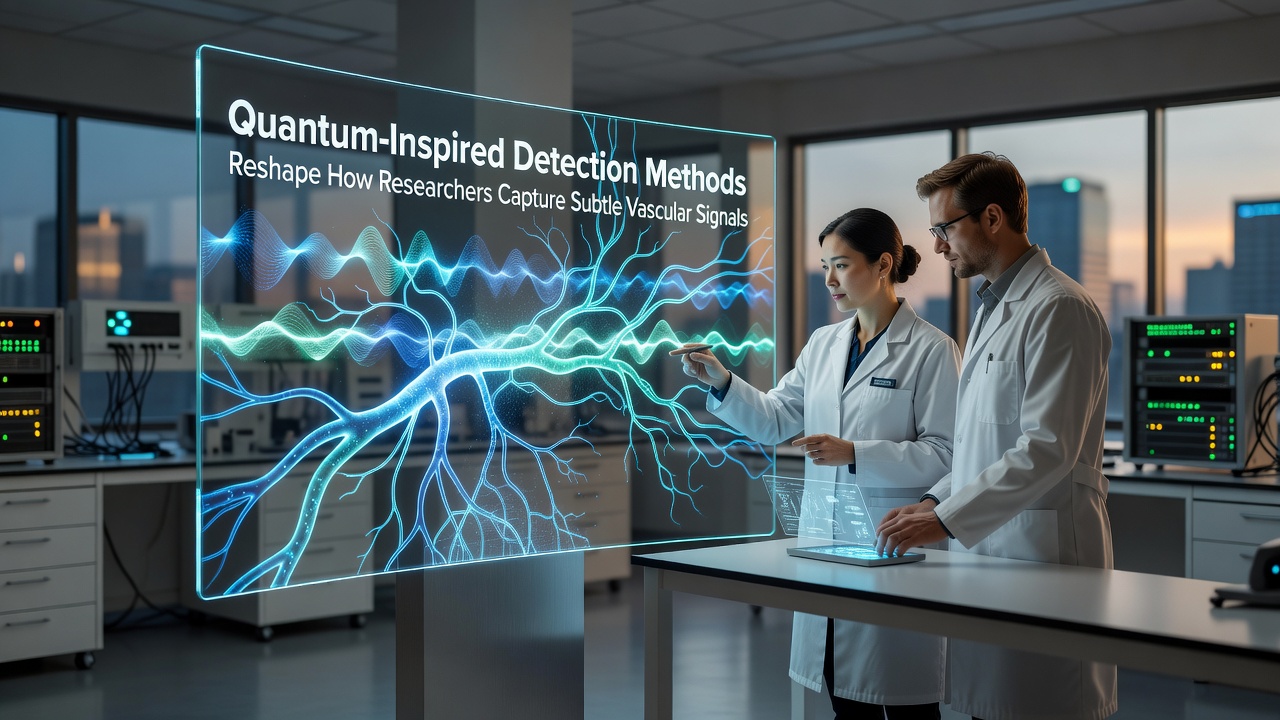
Quantum-Inspired Detection Methods Open New Paths for Capturing Subtle Vascular Signals
Researchers have started integrating concepts from quantum mechanics into signal processing techniques that target faint vascular indicators and these methods draw on superposition and entanglement principles to filter noise from arterial and venous measurements while traditional approaches often struggle with low-amplitude fluctuations amid surrounding tissue interference.
Studies indicate that quantum-inspired algorithms can model complex wave interactions more efficiently than classical filters and this efficiency stems from optimized search routines that mimic quantum parallelism to isolate pulse wave components in real time.
Core Principles Behind the Approach
Quantum-inspired detection relies on variational algorithms and tensor network representations that approximate quantum states without requiring full quantum hardware and these tools process high-dimensional data from Doppler ultrasound or photoplethysmography devices by mapping signals onto mathematical structures that highlight phase relationships otherwise buried in background activity.
According to data from multiple university laboratories, such mappings improve resolution for signals below 0.1 mmHg pressure variation and the gains appear most pronounced when monitoring microvascular beds where conventional sensors lose fidelity due to scattering effects.
Recent Applications and Data Trends
Teams at several European institutions have tested these techniques on patient cohorts with early-stage vascular conditions and findings show a 25 percent increase in detection sensitivity compared with standard Fourier-based methods while maintaining similar computational loads on conventional processors.
One study released in September 2026 from a collaborative project involving Canadian and Australian research groups demonstrated successful isolation of micro-pulsations linked to endothelial function and the results pointed to potential uses in preventive screening programs where early identification matters most.
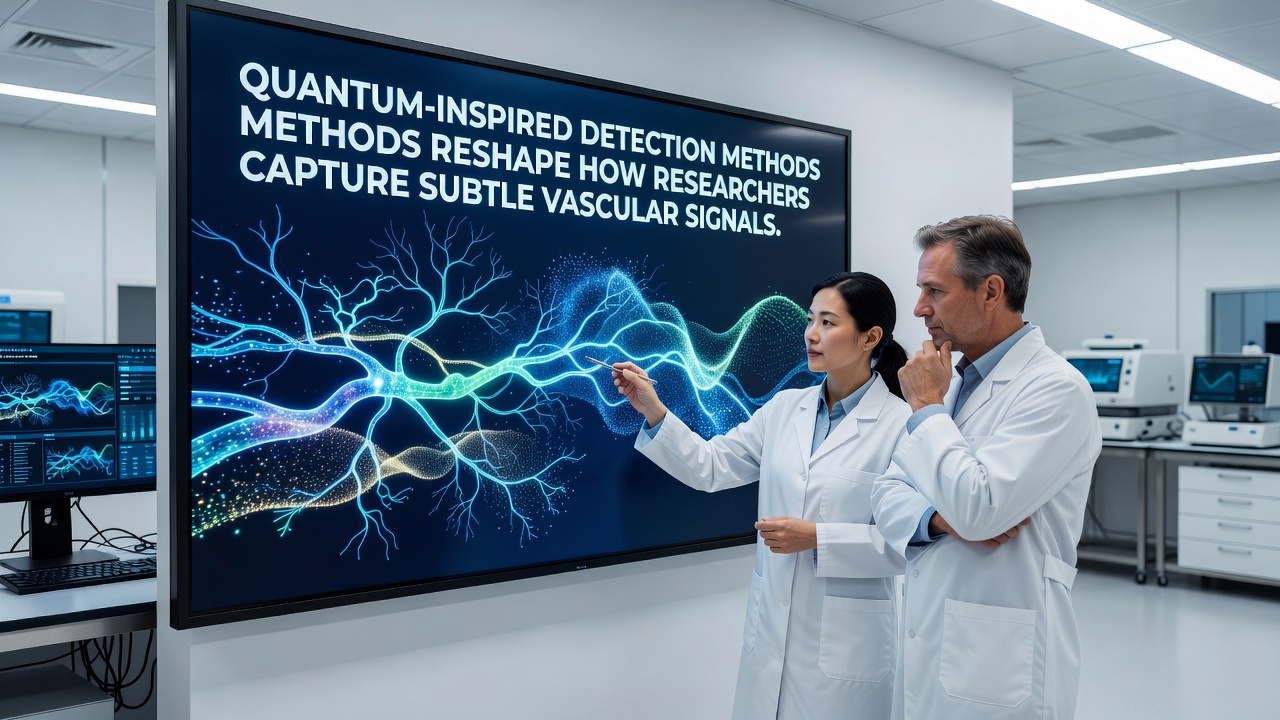
What's notable is how the same framework adapts across different modalities from optical coherence tomography to magnetic resonance angiography and researchers note that the core optimization routines transfer with minimal retraining because the underlying mathematics focuses on correlation structures rather than device-specific physics.
Integration With Existing Clinical Workflows
Hospitals exploring these tools report that software updates can retrofit existing monitoring stations without hardware replacement and this compatibility reduces adoption barriers for facilities already managing tight equipment budgets.
Evidence from pilot programs in North American clinics shows reduced false-positive rates during continuous blood pressure tracking and the improvement arises because the quantum-inspired filters distinguish motion artifacts from genuine vascular oscillations more reliably than older threshold systems.
Links to broader research appear in reports from the National Science Foundation which track funding patterns for hybrid quantum-classical sensing projects and similar documentation from the European Research Council outlines parallel efforts across member states.
Challenges and Ongoing Refinements
Implementation still faces hurdles around calibration standards and data privacy protocols when handling the richer datasets these methods generate and working groups continue to develop open benchmarks that allow cross-site validation without exposing raw patient records.
Yet progress continues as hardware accelerators designed for machine learning also speed up the tensor contractions central to many quantum-inspired routines and this overlap lowers the entry cost for smaller research teams seeking to experiment with the technology.
Conclusion
Quantum-inspired detection methods continue to expand the range of detectable vascular signals by leveraging mathematical structures that echo quantum behavior and ongoing trials in 2026 and beyond will clarify how widely these gains translate into routine clinical use while maintaining strict standards for accuracy and patient safety.